
Love Is Not a Feeling. It’s a Practice.
This month, we’ve been exploring love in a different way.
Not as something to find.
Not as something to fall into.
Not as something reserved for romance.
But as something we remember.
Something we practice.
And I didn’t expect to live this theme quite so literally.
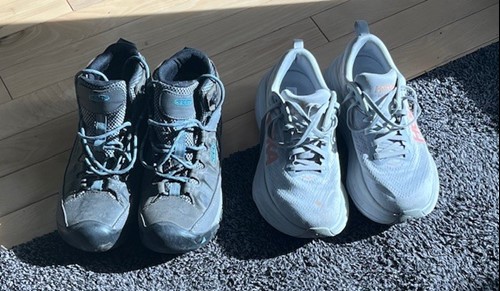
Since November, I’ve been dealing with a torn meniscus in my right knee. At times it has been deeply painful. Hiking — one of my daily rituals and sacred connections with Mother Earth — had to stop. The message from the sports medicine doctor was clear: no hiking for 6–8 weeks.
Then, layered on top of that, I caught a cold that slowed me down even more.
This season, self-love has not looked like bubble baths.
It has looked like listening.
Love as Regulation
There’s something powerful about teaching “self-love as presence” while being forced into presence by your own body.
When your knee hurts, you don’t get to override it.
When your immune system demands rest, productivity loses its vote.
Self-love in this season has meant:
- Getting the cortisone shot instead of “pushing through.”
- Scheduling physical therapy.
- Cancelling plans.
- Going to bed early.
- Asking, “What would feel supportive right now?”
Not indulgence.
Regulation.
Self-love is often described as kindness. But this season reminded me that self-love is also self-trust. It’s trusting your body when it says, “Not like this.”
Trusting that rest is not weakness.
Trusting that slowing down won’t make you fall behind.
Self-trust grows when your actions match what you know is true.
And sometimes what’s true is:
Stop.
Adapt.
Strengthen differently.
Interestingly, it’s my right knee. The knee allows us to bend — to move forward with flexibility rather than rigidity. And the right side of the body is often associated with action and forward momentum.
I couldn’t power through this season the way I normally might.
I had to bend.
Adjust.
Reroute.
Self-trust isn’t rigid.
It’s flexible.
It asks: What is the aligned way forward now?
Not the old way.
Not the forced way.
But the true way.
And when you move that way, something else opens.
When we feel safe inside ourselves, love flows naturally to others. Not forced. Not performed. Just present.
And sometimes safety looks like stopping.
Love in Relationships
One of the unexpected gifts of this season has been the way love showed up around me.
Friends and neighbors offered advice and assistance.
Family members checked in.
My son — who is a physician assistant — gave grounded, thoughtful medical guidance when I needed it.
Love wasn’t dramatic.
It wasn’t performative.
It was steady.
Practical.
Present.
And here’s what I noticed:
When I was regulated — when I wasn’t spiraling or resisting what was happening — I could actually receive that love.
Self-love created space for relational love.
When we’re fighting reality, we often miss support.
When we soften, we see it.
Love as Energetic Contribution
We live in a time that often feels heavy.
Even when we’re not watching the news closely, we can feel the density in the collective nervous system.
It’s easy to become reactive.
To tighten.
To over-function.
To immobilize.
But love, as a practice, changes the field.
When we regulate ourselves, when we choose presence over performance, when we pause before reacting, we contribute something different to the room. Love becomes less about sentiment and more about orientation.
It becomes the energy we bring.
Not bypassing reality.
Not denying pain.
But meeting the moment with steadiness instead of chaos.
That matters right now.
Love Is Where the Work Begins
But love that is practiced becomes trust.
And trust becomes courage.
When you trust yourself, you move differently.
You grow differently.
You stop forcing forward motion and start choosing aligned movement.
That is where becoming begins.
Next month, we’ll explore what happens after love stabilizes you —
when clarity asks you to stretch,
when truth asks you to stand taller,
when growth asks you to move forward with courage.
Because love prepares the ground.
But growth is what rises from it.
About the author
Cindi Bergen
As a child, Cindi believed in the magic of fairies — and as an adult, she never lost her ability to sense what’s unseen. Instead, she learned to translate it. What looks like magic to most isn’t an accident or a mystery… it’s the expression of universal principles most people never learned to read.
Through her own life experiences — from doubt to surrender, from stress to peace — Cindi became a bridge-builder between what the heart feels and what science proves. She intuitively translates deep spiritual insight into grounded understanding, and rigorous psychological research into actionable, heart-centered tools.
Her work is rooted in:
Cindi created the signature FLIP IT technique to help people shift out of negativity and into a positive perspective — not just temporarily, but in a way that becomes sustainable, embodied, and transformative.
She holds a master’s degree in Instructional and Performance Technology and has studied Appreciative Inquiry, a transformational change methodology grounded in psychology, sociology, and organizational behavior. Before dedicating her life to First Create Happiness, she spent years in training and development supporting Fortune 500 companies — helping people understand not just what to think, but how to think in ways that open possibility.
What she teaches isn’t about perfection. It’s about remembering who you truly are, reconnecting with your innate joy, and creating a life that reflects not just your desires — but your deepest self.
Cindi doesn’t ask you to believe blindly.
She invites you to experience what’s real.