
How To Build Resilience When the World Won’t Sit Still
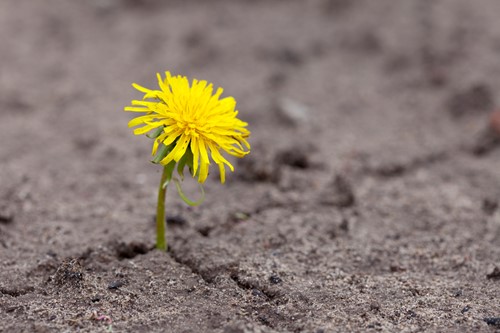
Resilience is the capacity to adapt, recover, and keep moving forward when life feels uncertain. In an unpredictable world—economic shifts, health worries, social change—people with anxiety often carry an extra cognitive load. The goal here isn’t to eliminate uncertainty (that’s impossible). It’s to strengthen your inner systems so your mind stays flexible, grounded, and capable of learning—no matter what shows up.
A quick orientation before we go further
This article focuses on practical mental habits that reduce anxiety’s grip over time. You’ll find tools for openness to change, curiosity-driven coping, lifelong learning, mindfulness, emotional agility, supportive relationships, and a realistic form of optimism that doesn’t deny difficulty.
When Uncertainty Triggers Anxiety (and What Helps Instead)
Anxiety often treats uncertainty as danger. The mind scans for threats, predicts worst-case outcomes, and tightens control. Resilience flips that pattern by changing the relationship you have with not knowing.
One powerful shift is replacing fear-based interpretation with curiosity. Curiosity asks: What’s happening here? What can I learn? What’s one small experiment I can try? This doesn’t mean liking uncertainty—it means meeting it without panic.
Helpful reframe:
Uncertainty is not a verdict. It’s a data point.
Core Practices That Strengthen Mental Resilience
Here are several evidence-supported practices that work together. You don’t need all of them at once; resilience grows through accumulation.
- Openness to change: Gently practice flexibility—trying new routines, adjusting expectations, letting plans evolve.
- Mindfulness: Regularly returning attention to the present moment reduces rumination and catastrophic thinking.
- Emotional agility: Allow emotions to exist without letting them dictate behavior.
- Supportive relationships: Safe connection regulates the nervous system better than self-talk alone.
- Lifelong learning: Learning keeps the mind adaptive rather than brittle.
How to Build Resilience Step by Step
This is a simple, repeatable process—especially useful during anxious periods.
A grounded how-to checklist:
- Name what’s uncertain (specific, not global).
- Notice the body response (tight chest, racing thoughts, fatigue).
- Shift from “What if?” to “What’s next?”
- Choose one controllable action (small is enough).
- Reflect on what you learned, not just the outcome.
This sequence trains your nervous system to associate uncertainty with movement rather than freeze.
Emotional Agility: Let Feelings Move Without Driving
Resilience isn’t emotional suppression. It’s emotional mobility. Anxiety becomes more intense when feelings are resisted or judged.
Think of emotions as weather patterns—real, temporary, and informative.
|
Emotion Felt |
Common Reaction |
More Resilient Response |
|
Anxiety |
Avoidance |
Gentle exposure + curiosity |
|
Fear |
Control-seeking |
Grounding + choice |
|
Frustration |
Self-criticism |
|
|
Sadness |
Withdrawal |
Connection + rest |
Allowing emotions to move through you reduces their long-term intensity.
Learning as a Mental Stabilizer (Not Pressure)
Lifelong learning isn’t about constant productivity. For anxious minds, it builds confidence in adaptability. When you’re learning, your brain practices novelty in safe, structured ways.
This can include hobbies, skill development, or formal education. Many people find that pursuing flexible online degree or certification programs—especially in applied fields—supports both career adaptability and mental resilience. For example, programs like a health care administration masters online allow learners to build practical knowledge while maintaining life balance. Continuing education strengthens curiosity, reinforces a growth mindset, and keeps the mind agile for new opportunities—without requiring abrupt life disruption.
Balancing Optimism with Realism
Resilient optimism isn’t positive thinking at all costs. It’s realistic hope.
- Realism: Acknowledge difficulty without minimizing it.
- Optimism: Believe your skills and supports can grow.
This balance prevents the emotional whiplash that anxious people often experience when positivity feels forced or fake.
A Resource Worth Knowing About
If anxiety is a frequent companion, structured, evidence-based guidance can help. Anxiety Canada offers free tools, worksheets, and educational resources grounded in cognitive-behavioral research.
Their materials are practical, compassionate, and accessible—especially helpful during high-uncertainty periods.
Frequently Asked Questions
Is resilience something you’re born with?
No. Resilience is a skill set that develops through practice, experience, and support.
Can mindfulness increase anxiety at first?
Sometimes. This is common and usually temporary. Short, guided practices can help ease the transition.
How long does it take to feel more resilient?
Small changes often appear within weeks. Deeper shifts emerge over months of consistent practice.
Do I need therapy to build resilience?
Not always, but therapy can significantly accelerate progress—especially if anxiety is impairing daily life.
A Few Closing Thoughts
Future-proofing your mind doesn’t mean hardening it. It means making it flexible, curious, and well-supported. In an unpredictable world, resilience grows through small, humane practices repeated over time. You don’t need certainty to move forward—you need skills, compassion, and the willingness to keep learning.
With gratitude to Kimberly Hayes, Chief Blogger at PublicHealthAlert.info for this article.
Thanks to Freepik for the image
About the author
Kimberly Hayes
Chief Blogger at PublicHealthAlert.info