
Gratitude Is More Than a Thank You
Finding appreciation for the life we've lived, the people who've helped us, and the person we've become.
A few days ago, I attended a surprise 70th birthday celebration for my former husband.
Our son and his half-sister had organized the gathering, and it was quite a celebration! The brewpub was filled with people, laughter, and lively conversation. My former husband was genuinely surprised and thoroughly delighted.
I enjoyed reconnecting with friends I hadn't seen in years. But after a while, I was ready for some peace and quiet.
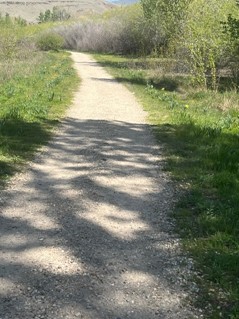
On my way home, I stopped at a nearby park and took a short walk.
And something wonderful happened.
As I walked in the quiet, I was overcome with a profound sense of gratitude for the life I've created. A life filled with peace, independence, contemplation, and the freedom to live in ways that feel authentic to me.
I truly LOVE living alone.
But as I reflected on that feeling, I realized something even more meaningful.
I wasn't just grateful for the life I have today. I was grateful to the younger version of myself who had the courage to make it possible.
The Gift I Couldn't See at the Time
I grew up with the implied message that I needed a man in my life to survive financially.
It was a deeply ingrained belief, and challenging it was frightening.
I still remember a moment shortly after my marriage ended. I had rented an apartment I couldn't really afford, and I found myself sitting on the kitchen floor, sobbing.
I was terrified that I wouldn't be able to survive, especially financially. I'd made an enormously difficult decision without knowing whether I could make it on my own.

Looking back, I wish I could put my arms around that frightened young woman and tell her that one day she would not only survive but genuinely love the life she had created.
Walking through the park, I felt such deep appreciation for her courage.
And that experience reminded me that gratitude isn't always about something we've been given. Sometimes it's about recognizing the gifts we've given ourselves through the choices we've made.
Even when those choices were terrifying at the time.
Gratitude Is More Than Recognizing What's Good
Throughout November, we've explored gratitude as a way to notice and appreciate the goodness in our lives.
We often think of gratitude as saying thank you for something we've received: a thoughtful gesture, a beautiful experience, an unexpected kindness.
Gratitude can be much richer than that.
It can deepen our appreciation for the present, change how we understand the past, and help us recognize possibilities for the future.
And there's science behind some of these benefits.
A 2025 analysis of 145 studies involving nearly 25,000 participants found that gratitude practices produced small but measurable improvements in well-being.
That's encouraging because gratitude doesn't require extraordinary circumstances. It's something we can practice in the ordinary moments of everyday life.
But there's an important distinction I've come to appreciate.
It's one thing to recognize something good. It's another to allow ourselves to truly experience it.
Don't Just Notice the Good. Let It Sink In.
Psychologist and author Rick Hanson explores this idea in his H.E.A.L. practice, a process designed to help us take in positive experiences and gradually develop healthier emotional patterns.
The four steps are:
- H — Have a beneficial experience. Notice something good that's happening right now, or bring to mind a positive experience from your past.
- E — Enrich the experience. Stay with it. Make it as vivid as possible by engaging your senses. What did you see, hear, smell, taste, or feel? What emotions did you experience? Notice the details that make this experience meaningful to you.
- A — Absorb the experience. Allow those positive feelings to sink deeply into your body, like a soothing balm. Imagine the warmth, peace, or happiness spreading through you, nourishing you from within. Don't just think about the goodness. FEEL it. Let the experience settle into you.
- L — Link the positive experience with an old negative belief or emotional pattern. Once you're firmly grounded in the positive feeling, you can gently bring a related negative experience into awareness while keeping the positive experience in the foreground. Over time, this may help soften old emotional responses and support the development of healthier ones.
An important note about Link: Hanson emphasizes that this fourth step is optional. The positive experience should feel strong and stable before introducing a negative memory or belief of a related emotional nature. If the negative feelings become overwhelming, release the negative memory and return your attention entirely to the positive experience. There's no need to force the process. The first three steps are valuable on their own.
I find the Link step particularly fascinating because so many of us carry beliefs formed through experiences we may barely remember. Those beliefs can influence our choices long after the circumstances that created them have changed.
For much of my life, I carried the belief that I needed a man to survive financially. Yet the deep peace and contentment I felt walking through the park reflected an entirely different reality.
I had created a life of independence, security, and freedom that I genuinely love.
And as I remembered that frightened young woman sitting on the kitchen floor, I could appreciate how far I'd come.
The fear she felt was real. But so is the peace I feel now.
Rather than viewing that earlier experience only through the lens of fear, I could hold it alongside my present appreciation for the life I'd created.
The past hasn't changed. But my understanding of it has.
And instead of simply acknowledging that I was grateful, I allowed myself to fully feel that gratitude and let it sink in.
None of Us Creates a Life Alone
There's another dimension to my story that I don't want to overlook.
Although I am profoundly grateful for my own choices, I certainly didn't create this life entirely on my own.
I've had countless mentors, friends, and supporters who encouraged me, believed in me, and helped me along the way. I still do.
A.J. Jacobs explores this interconnectedness beautifully in his book Thanks a Thousand, tracing the astonishing number of people responsible for something as ordinary as his morning cup of coffee.
The Japanese reflective practice of Naikan invites a similar awareness by asking us to consider what we've received from others, what we've given in return, and how our actions have affected them.
Both remind us that our lives are shaped by far more people than we sometimes recognize.
And I am deeply grateful for mine.
Gratitude Can Hold More Than One Truth
Something else struck me about my experience.
I could be grateful that my former husband remains a strong presence in our son's life. I could appreciate the friends we once shared and enjoy celebrating an important milestone in his life.
And I could be equally grateful that our lives took different paths.
Both things could be true.
Gratitude doesn't require us to pretend that everything was wonderful or that every experience was meant to happen.
We don't have to be grateful for the pain we've endured to appreciate what we've learned, how we've grown, or where our choices have led us.
Sometimes gratitude arises not because life has been easy, but because we finally recognize how far we've come.
A Different Kind of Thank You
As November draws to a close, I've been thinking about how much my understanding of gratitude has deepened.
It's easy to appreciate the blessings we can see today. But sometimes the most meaningful gifts are the ones we couldn't recognize when they first appeared.
A difficult decision. A frightening leap into the unknown. The courage to question something we've always believed.
Sometimes it takes years before we can appreciate what those moments made possible.
I think about that frightened young woman sitting on her kitchen floor, wondering how she would ever manage on her own.
I wish she could have glimpsed the life that awaited her.
And I think about myself walking peacefully through the park after the birthday celebration, surrounded by the quiet beauty of nature.
In that moment, I wasn't thinking about everything I'd overcome or what might come next.
I was simply appreciating where I was.
And somewhere in that deep sense of peace and contentment was a heartfelt thank you to the younger version of myself who had been brave enough to make a different choice.
She couldn't have known how much I would one day love the life she made possible.
About the author
Cindi Bergen
As a child, Cindi believed in the magic of fairies — and as an adult, she never lost her ability to sense what’s unseen. Instead, she learned to translate it. What looks like magic to most isn’t an accident or a mystery… it’s the expression of universal principles most people never learned to read.
Through her own life experiences — from doubt to surrender, from stress to peace — Cindi became a bridge-builder between what the heart feels and what science proves. She intuitively translates deep spiritual insight into grounded understanding, and rigorous psychological research into actionable, heart-centered tools.
Her work is rooted in:
Cindi created the signature FLIP IT technique to help people shift out of negativity and into a positive perspective — not just temporarily, but in a way that becomes sustainable, embodied, and transformative.
She holds a master’s degree in Instructional and Performance Technology and has studied Appreciative Inquiry, a transformational change methodology grounded in psychology, sociology, and organizational behavior. Before dedicating her life to First Create Happiness, she spent years in training and development supporting Fortune 500 companies — helping people understand not just what to think, but how to think in ways that open possibility.
What she teaches isn’t about perfection. It’s about remembering who you truly are, reconnecting with your innate joy, and creating a life that reflects not just your desires — but your deepest self.
Cindi doesn’t ask you to believe blindly.
She invites you to experience what’s real.